General
How to Improve Problem-Solving Skills: A Practical Guide for Students
By Team DIRECTIV · · 5 min read
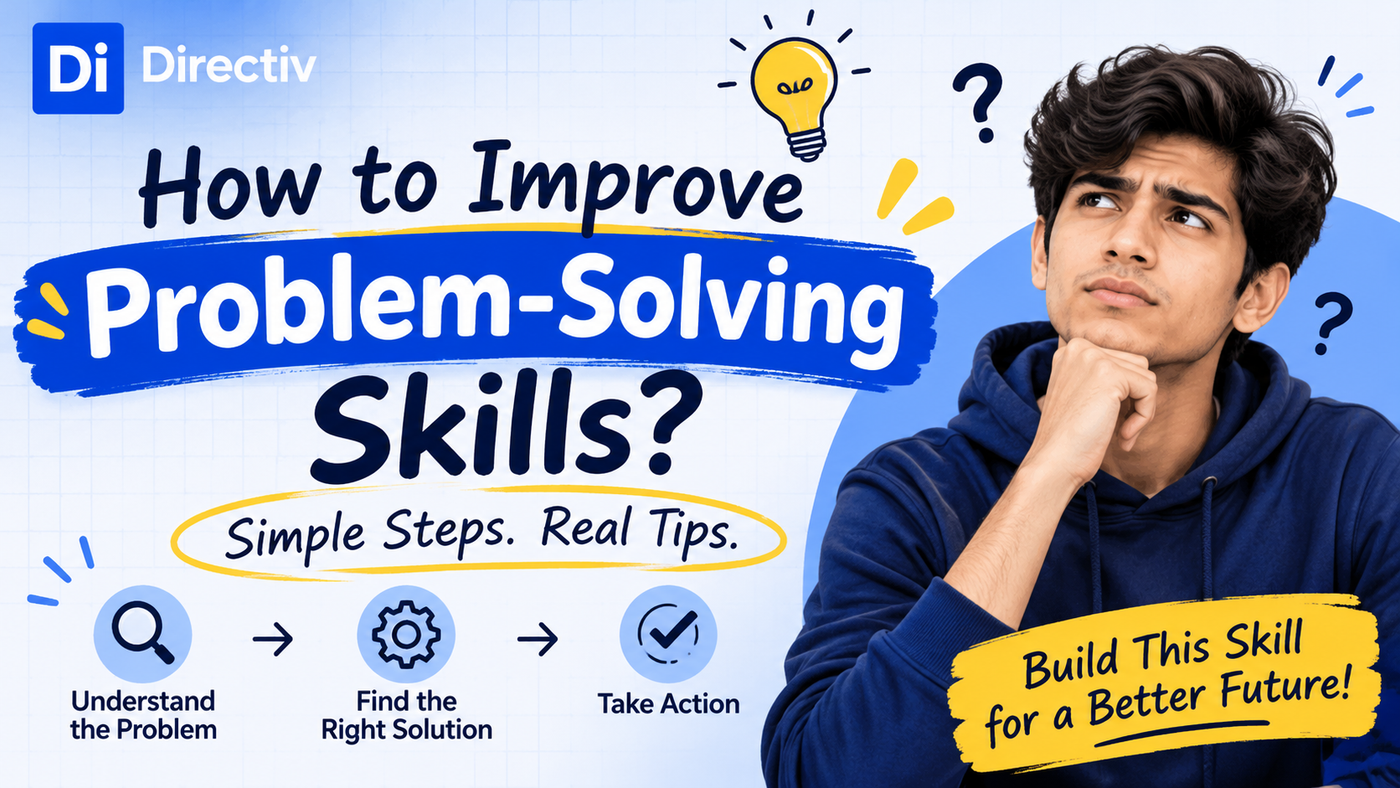
How to Improve Problem-Solving Skills: A Practical Guide for Students
Problem-solving is not about finding a quick solution to a problem. It is about understanding the situation and finding the most appropriate solution according to the situation.
It is an important skill for everyone, whether you are a student, a working professional, or someone managing everyday responsibilities.
But what exactly are problem-solving skills, and how can you develop them? Let's understand.
What Are Problem-Solving Skills?
Problem-solving skills are the ability to identify a problem, understand the situation, and find the most appropriate solution after analysing the available options, their pros and cons, and taking action.
It is not always about choosing the first solution that comes to your mind. Sometimes, you need to think from different angles, understand what is actually causing the problem, and then decide what will work best.
Why Are Problem-Solving Skills Important?
Think about it. You are working on a college project, and suddenly your team faces an issue. What will you do? Will you wait for someone else to solve it, or will you try to understand the problem and find a way forward?
This is where problem-solving skills come into action.
These skills are important because:
- In Studies: They help you understand difficult topics, complete assignments, and handle academic challenges.
- In Your Career: Companies need people who can handle situations, make decisions, and find solutions instead of waiting for instructions every time.
- In Daily Life: From managing money to making important decisions, problem-solving helps you handle different situations better.
This is also why problem-solving is considered one of the important skills to develop before starting your career. You can also read our guide on essential career skills to develop before your first placement.
6 Important Skills That Help You Become a Better Problem-Solver
Problem-solving is not just one skill. There are other skills that help you understand situations and make better decisions.
- Critical Thinking: It helps you think clearly, question information, and understand a situation before making a decision.
- Analytical Thinking: It helps you break a big problem into smaller parts and understand its actual cause.
- Communication: Sometimes, solving a problem requires discussing it with others, listening to their opinions, and explaining your own thoughts.
- Creativity: Not every problem has a common solution. Creative thinking helps you explore different ways to handle it.
- Decision-Making: After looking at different options, you need to decide which solution is more suitable for the situation.
- Adaptability: Sometimes your first solution doesn't work. You should be able to change your approach and try something different.
5 Steps to Solve Any Problem Effectively
Whenever you face a problem, instead of reacting immediately, try following these five steps.
1. Identify the Problem
First, understand what the actual problem is. Sometimes, what we see is only a result of something else. So, don't make decisions without understanding the situation.
2. Find the Root Cause
Ask yourself why this problem is happening. What is causing it? Is there something you are missing? Understanding the actual reason makes finding a solution easier.
3. Explore Different Solutions
Don't depend on just one idea. Think about different possible solutions and consider their advantages and disadvantages.
4. Choose the Most Appropriate Solution
Now compare your options and choose the one that makes the most sense according to the situation, available resources, and time.
5. Take Action and Review the Result
A solution is only useful when you actually implement it. After taking action, check whether it worked. If it didn't, understand what went wrong and try another approach.
How Can You Improve Problem-Solving Skills?
You don't need to be naturally good at problem-solving. It is something you can develop with regular practice.
Here are a few things you can start doing:
- Try solving problems yourself: Whenever you face a small challenge, first try to find a solution on your own instead of immediately asking someone else.
- Ask the right questions: What is the actual problem? What is causing it? What information do I need?
- Break bigger problems into smaller parts: It becomes easier to understand and handle a problem when you divide it into smaller tasks.
- Learn from your mistakes: Whenever something doesn't work, try to understand why instead of repeating the same approach.
- Work on practical challenges: Participate in group projects, take responsibility, and try new things where you have to make decisions.
One important thing to understand is that knowing a solution when someone explains it and finding that solution yourself are two different things. You can understand many theories, but your problem-solving skills actually improve when you start applying what you learn.
At Directiv, we also believe that practical learning and real-life challenges play an important role in developing skills. Learning something is just the first step; applying it is what helps you improve.
You can also explore our guides on improving communication skills and building confidence as a student, as these skills also help you handle different situations better.
Frequently Asked Questions
1. Can I develop problem-solving skills from scratch?
Yes. Anyone can develop problem-solving skills. Start with small everyday problems, try different solutions, and learn from your mistakes.
2. What are the five main steps of problem-solving?
The five main steps are identifying the problem, finding its root cause, exploring solutions, choosing and implementing the best option, and reviewing the result.
3. Is problem-solving a soft skill?
Yes. Problem-solving is an important soft skill that involves critical thinking, analytical thinking, communication, creativity, and decision-making.
4. Why do employers look for problem-solving skills?
Employers value people who can understand challenges, make decisions independently, and find practical solutions when things don't go as planned.
Conclusion
Problem-solving is not something you learn in one day. It improves with experience, practice, and the way you approach different situations.
Don't always look for someone to give you the answer. Try to understand the problem, think about possible solutions, and take action. Even if your first attempt doesn't work, you will learn something from it.
Because in the end, the goal is not just to find a solution, but to find the right solution for the situation.
Ready to build real-world skills?
Join DIRECTIV and start your journey in finance, content and communication.
Get in Touch