General
What If LTCG Tax Disappears? 5 Indian Sectors That Could Get a Major Boost
By Team DIRECTIV · · 6 min read
What If LTCG Tax Disappears? 5 Indian Sectors That Could Get a Major Boost
Imagine selling your investments and keeping more of your profits instead of paying long-term capital gains (LTCG) tax. Would you invest more? Hold stocks longer? Or finally explore mutual funds?
That is why the debate around scrapping LTCG tax in India attracts investors' attention. However, abolishing LTCG tax remains a hypothetical scenario unless officially announced by the government.
At Directiv, we believe understanding taxation, market trends, and investment risks is essential before making financial decisions.
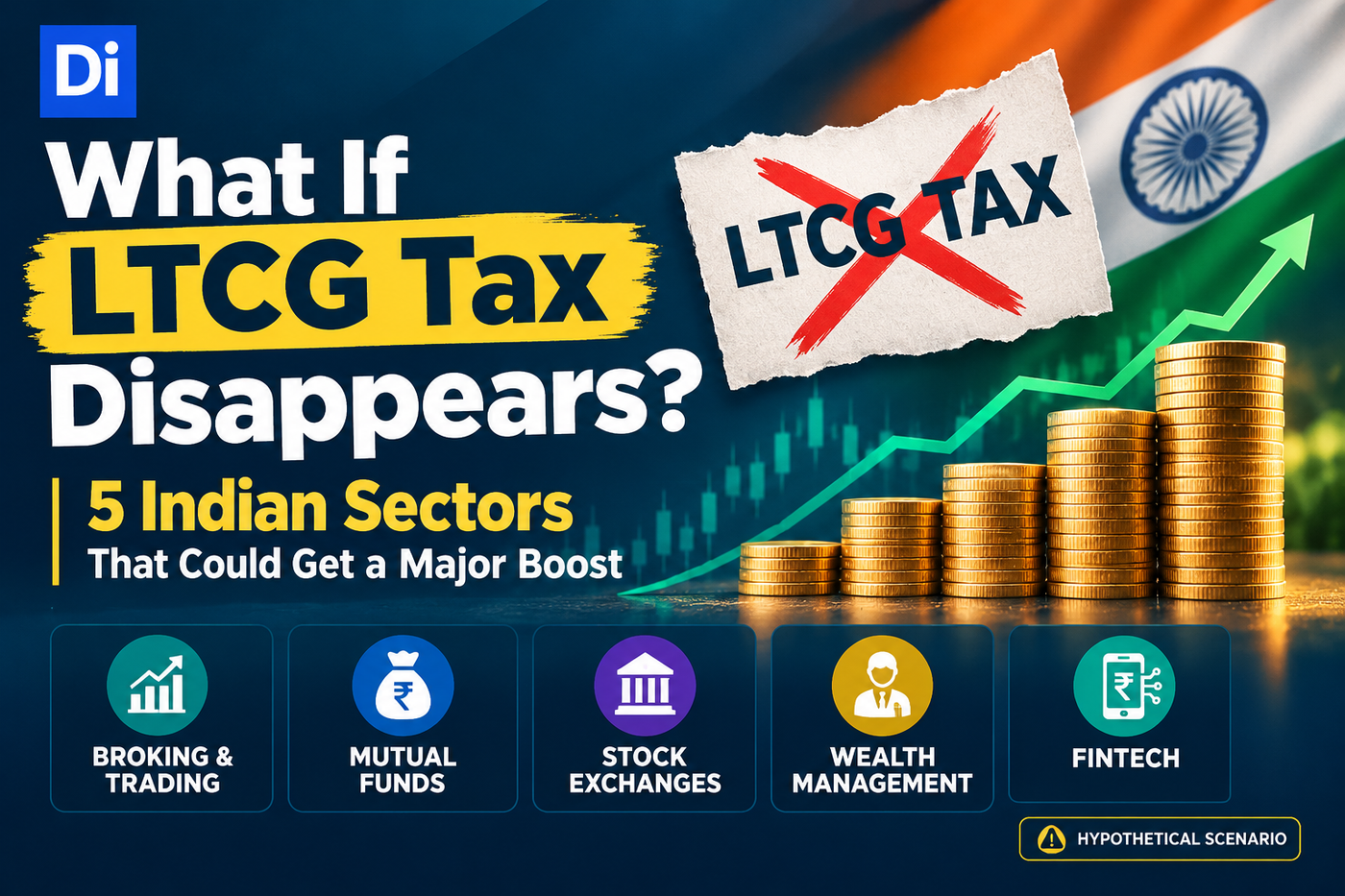
Let's explore five Indian sectors that could potentially benefit if LTCG tax were abolished.
First, What Is LTCG Tax?
Long-term capital gains tax applies to profits earned when certain assets are sold after the applicable holding period.
Under India's current tax framework, qualifying long-term gains on listed equity shares and equity-oriented mutual funds are generally taxed at 12.5% on aggregate gains exceeding ₹1.25 lakh in a financial year, subject to applicable conditions.
The rules can differ depending on the asset, holding period, transaction eligibility, and other circumstances.
If this tax were abolished, the after-tax returns on eligible investments could improve. That might influence investor behaviour and the financial services industry.
But which sectors could benefit?
5 Sectors That Could Gain Momentum if LTCG Tax Disappears
1. Stockbroking and Trading Platforms
Lower tax friction could make equity investing more attractive to some investors.
Online brokers and trading platforms might benefit if more individuals open investment accounts, increase their participation in the stock market, or explore long-term investing.
Potential beneficiaries could include companies providing brokerage services, investment platforms, and related market-access technology.
However, increased investor participation and trading volumes are not guaranteed. Market sentiment, brokerage fees, and investment performance would continue to influence demand.
2. Mutual Funds and Asset Management
Mutual funds are an important route through which Indian households participate in financial markets.
If eligible long-term equity gains became tax-free, some investors might find equity-oriented mutual funds more attractive from an after-tax return perspective.
This could potentially support asset management companies and platforms that distribute mutual fund products.
The actual impact would depend on investor preferences, market returns, fund performance, and the tax treatment of different investment products.
Investors should compare funds based on their goals, risk tolerance, costs, and investment horizon rather than making decisions based only on a possible tax change.
3. Stock Exchanges and Market Infrastructure
Stock exchanges and market infrastructure providers support India's securities markets.
If an LTCG tax abolition encouraged additional investment activity, exchanges and related service providers could potentially benefit from higher market participation.
Other businesses involved in clearing, settlement, and market technology might also experience increased demand.
However, the effect would not necessarily be immediate. Exchange revenues depend on several factors, including trading activity, market conditions, product mix, and applicable fees.
A potential policy change should therefore be viewed as one possible influence rather than a guarantee of business growth.
4. Wealth Management and Financial Advisory
As more people explore investing, they may need help understanding asset allocation, diversification, taxation, and long-term financial planning.
This could create opportunities for wealth management firms and financial advisers.
Investors may increasingly seek guidance on balancing equities, mutual funds, fixed-income products, and other assets according to their financial goals.
Professional guidance can help investors understand risks and avoid decisions driven by short-term market excitement.
At Directiv, we believe financial education is an important foundation for making informed financial choices.
5. Financial Technology (Fintech)
India's fintech ecosystem includes digital investment platforms, portfolio-tracking tools, personal finance applications, and financial education services.
If interest in long-term investing increased following a hypothetical LTCG tax abolition, these businesses could see stronger demand.
Platforms that make investment information easier to understand and help users monitor their portfolios might attract additional attention.
Nevertheless, fintech companies face competition, regulatory requirements, technology costs, and changing consumer preferences. A tax change alone would not determine their performance.
Will These Sectors Automatically Explode?
Not necessarily.
Even if LTCG tax were abolished, no sector would be guaranteed to grow or deliver strong investment returns.
Financial markets respond to many factors, including:
- Corporate earnings and business performance.
- Interest rates and inflation.
- Domestic and global economic conditions.
- Investor confidence and market valuations.
- Government policies and regulatory changes.
- Competition and technological developments.
A tax reduction could improve the after-tax attractiveness of certain investments. However, it would not eliminate market risk or guarantee rising stock prices.
Investors should also distinguish between an official government announcement, a policy proposal, and market speculation.
Important: The possible benefits discussed in this article are hypothetical. Do not interpret them as confirmation that India will abolish LTCG tax.
The Bigger Lesson: Understand Before You Invest
Tax policies can influence investment decisions, but they should never be the only factor behind them.
Before investing, consider your financial goals, investment horizon, risk tolerance, diversification, and the tax rules that apply to your situation.
At Directiv, we believe financial literacy is essential for making confident money decisions.
Understanding taxes, investment risks, and market behaviour matters far more than chasing the next big market prediction.
Because smart investing starts with knowledge, not hype.
Frequently Asked Questions (FAQs)
What is LTCG tax in India?
Long-term capital gains tax is the tax applied to eligible profits from selling certain assets after the applicable holding period. The rate and exemptions depend on the asset type and relevant tax rules.
Has India abolished LTCG tax?
Do not assume LTCG tax has been abolished. Check official government announcements and current tax rules before making investment decisions.
Which sectors could benefit if LTCG tax disappears?
Potential beneficiaries could include stockbroking and trading platforms, mutual funds and asset management companies, stock exchanges, wealth management firms, and fintech businesses. The actual impact would depend on investor behaviour and broader market conditions.
Would removing LTCG tax make stock prices rise?
Not necessarily. Tax changes can influence investor sentiment, but stock prices also depend on earnings, valuations, interest rates, economic conditions, and other factors.
Should investors buy stocks based on LTCG tax speculation?
Investors should avoid making decisions based solely on speculation. Consider your financial goals, risk tolerance, diversification, and the fundamentals of each investment.
Final Thoughts
The possibility of LTCG tax abolition raises interesting questions about India's investment landscape. Several financial services sectors could potentially benefit if investor participation increased.
However, hypothetical policy changes should never replace careful research and sound financial planning.
Follow Directiv for educational insights that help you understand financial markets, investment concepts, and money decisions.
Disclaimer: This article is for educational and informational purposes only and does not constitute investment, financial, or tax advice. The sector impacts discussed are hypothetical and are not guaranteed outcomes. Tax rules may change. Verify the latest official provisions and consult a qualified professional for advice specific to your circumstances.
This article is for general educational purposes only and is not personalised financial, investment, tax or legal advice. Please consult a qualified professional before making financial decisions.
Ready to build real-world skills?
Join DIRECTIV and start your journey in finance, content and communication.
Get in Touch