Finance
The 50/30/20 Rule: The Simplest Budgeting Strategy for Beginners
By Team DIRECTIV · · 2 min read
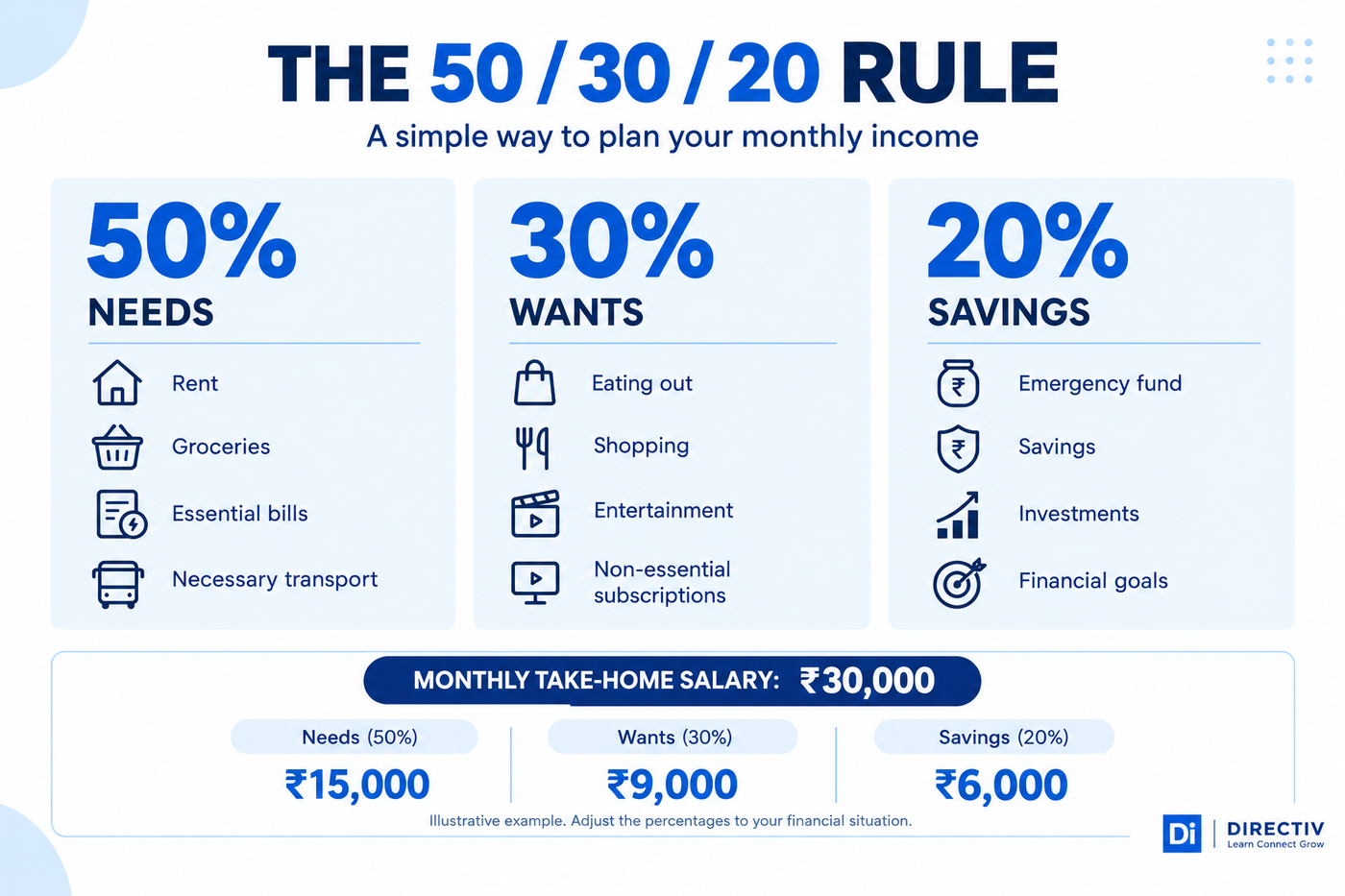
The 50/30/20 Rule: How to Budget Your Salary in India
The 50/30/20 rule—a simple, proven framework popularized by Senator Elizabeth Warren in her landmark book, All Your Worth: The Ultimate Lifetime Money Plan. This simple method helps you manage your money, build wealth, and still enjoy life without guilt. Here is how the 50/30/20 budget framework works and how you can implement it today in under three minutes.
What is the 50/30/20 Budgeting Rule?
The 50/30/20 rule divides your after-tax take-home pay into three main spending categories: Needs, Wants, and Savings.
Important: Always calculate this percentage using your net income (what actually hits your bank account after taxes and payroll deductions).
The 50/30/20 Rule Breakdown:
Needs (50%)-
Absolute essentials for survival & basic working Capability. For Example: Rent/mortgage, utilities, groceries, transportation, minimum debt payments.
Wants (30%)-
Non-essential lifestyle choices that add comfort or Fun. For Example: entertainment, streaming subscriptions, travel, hobbies.
Savings & Goals (20%)-
Building future wealth and paying off debt fast. For Example: Emergency fund, retirement accounts, investments, extra debt payments.
How to Calculate Your 50/30/20 Budget (Real-World Example)
Let’s assume your monthly after-tax income is $4,000:
1. 50% for Needs ($2,000): Covers $1,400 rent, $200 utilities, $300 groceries, and $100 minimum car payment.
2. 30% for Wants ($1,200): Covers dining out, gym memberships, Netflix, and weekend outings.
3. 20% for Savings ($800): Goes straight into a high-yield savings account or investment accounts. Leading experts at Forbes Advisor recommend prioritizing an emergency fund that covers 3 to 6 months of living expenses first.
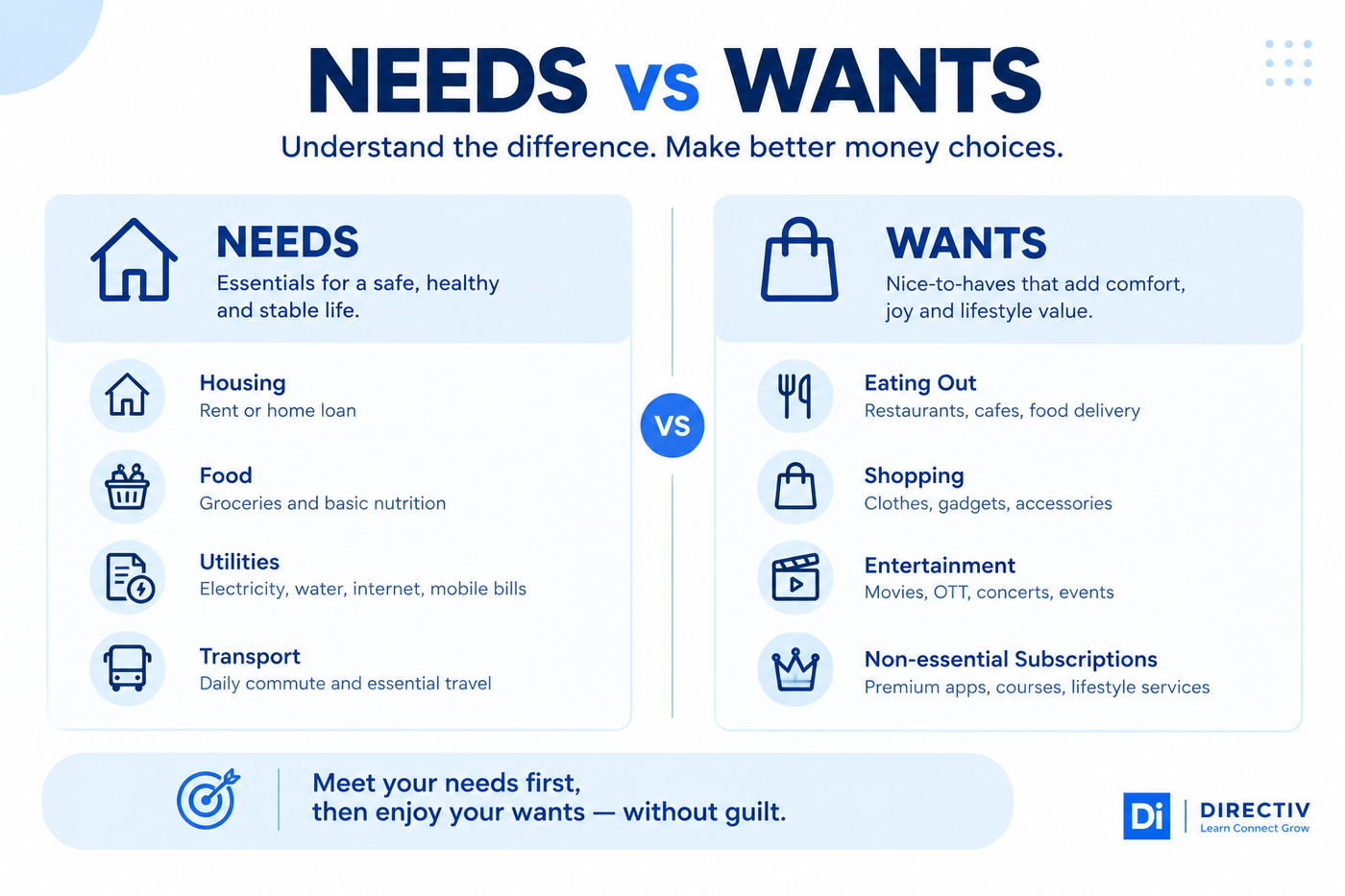
Pro Tips: Avoid These 3 Common Budgeting Mistakes
- Confusing “Wants" with “Needs” : High-speed home internet is a need if you work remotely, but premium 4K streaming is a want. Be honest with your classifications.
- Treating Minimum Debt as Savings: Only extra principal debt payments belong in the 20% category. The minimum monthly payments required to keep your credit intact are Needs.
- High Cost-of-Living Adjustment : If living in an expensive city pushes your Needs to 60%, don’t panic. Adjust your framework temporarily to 60/20/20 or 60/25/15 until your income increases.
3 Quick Steps to Start Tonight
- Check your last pay stub to confirm your exact net income.
- Review last month’s bank statement and highlight expenses in three colors: Needs, Wants, and Savings.
- Automate your 20% savings on payday so you never accidentally spend it.
Frequently Asked Questions (FAQs):
Q: What is net income ?
A: Net income is the amount of money you receive after deductions such as taxes, PF, and other salary deductions.
Q: What is take-home pay also known as?
A: Take-home pay is commonly referred to as net income, post-tax income, or net pay.
Read this article as well:
Ready to build real-world skills?
Join DIRECTIV and start your journey in finance, content and communication.
Get in Touch