General
Skills vs Degree: What Matters Most Today?
By Team DIRECTIV · · 4 min read
Skills vs Degree: Which Matters the Most in Today's World?
When you go for an interview, what does a company look for? Your marks, your degree, your general knowledge, or your ability to do the job?
When a company hires someone, its goal is to find a person who can solve problems, contribute to the company's growth, and help achieve its goals. But does that mean a degree is no longer important?
Not at all.
A degree can help you reach the door of an opportunity, while your skills can help you grab that opportunity and grow in your career.
So, skills vs degree—which is better? Let's understand.
Why Are Skills Becoming More Important?
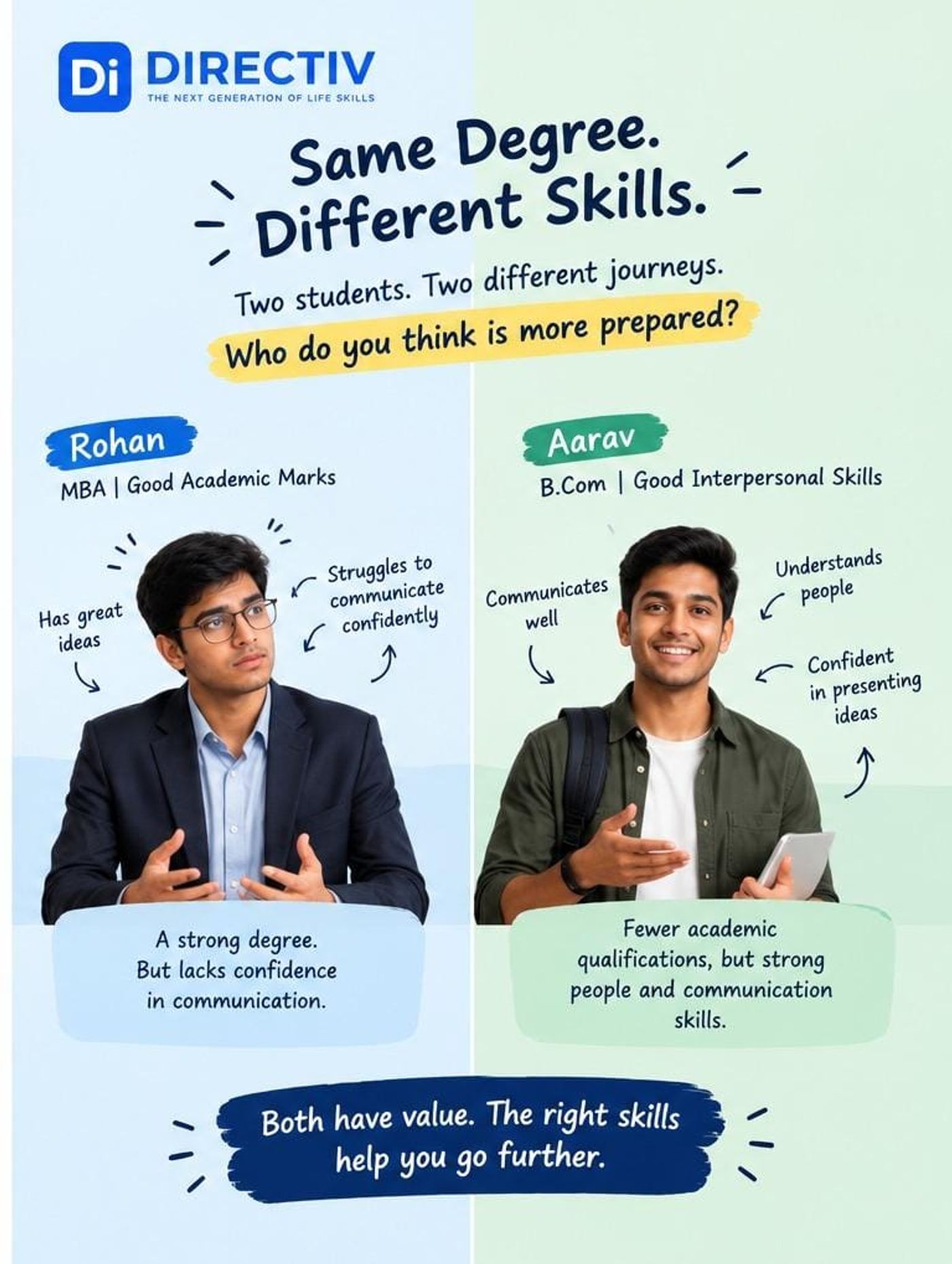
Imagine two students.
The first has completed an MBA with excellent marks. They have great ideas but struggle to communicate them confidently.
The second has completed a B.Com degree. They may have fewer academic qualifications, but they communicate well, understand people, and confidently present their ideas.
Who would be a better employee?
It depends on the job. The second student may have an advantage in a role that requires communication and teamwork, while the first may be better suited to a role that requires other strengths.
However, the B.Com graduate might not qualify for certain positions that require an MBA.
This shows why both education and practical skills for students matter. A degree can help you qualify, while your skills help demonstrate what you can do.
What Skills Should Every Student Develop?
Whatever career you choose, some skills can help you in almost every field.
- Communication: Express your ideas clearly, listen to others, and build professional relationships.
- Problem-solving: Find practical solutions instead of getting stuck when challenges arise.
- Financial literacy: Learn to manage your own money, track expenses, create a budget, save regularly, and understand basic investing.
- Adaptability: Learn new things and adjust to changing situations.
- Teamwork: Work effectively with others, understand different perspectives, and contribute towards shared goals.
These skills can help you become more confident in everyday life and better prepared for professional opportunities.
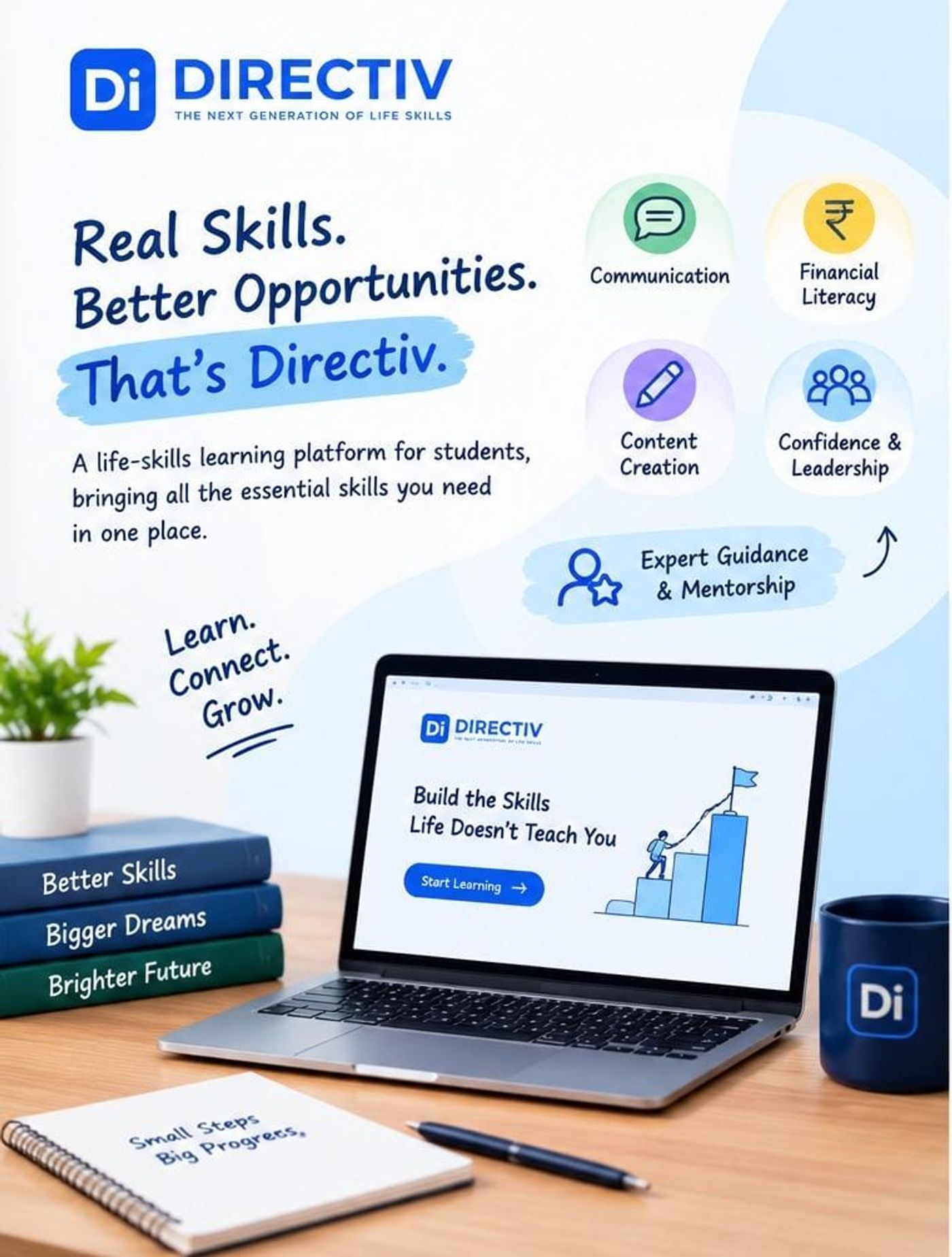
You can start developing them through practice, projects, and real-world experiences. You can also explore Directiv, a life-skills learning platform that brings practical learning in areas such as communication, financial literacy, and content creation together in one place at an affordable price.
How Is Directiv Different?
Every student has different strengths and struggles. So, should everyone learn in exactly the same way? Not necessarily.
For example, one student knows what to say but lacks the confidence to speak. Another feels confident but doesn't know how to organise their thoughts. A third communicates well but struggles to manage money.
The problem is different for each student, so the solution should be relevant to their needs.
Directiv aims to help students identify the skills they need to improve and find practical ways to develop them. Instead of treating every student the same, its approach focuses on understanding individual challenges and helping learners build the skills they need.
The goal is simple: make practical life skills easier to learn, accessible, and useful beyond the classroom.
3 Myths About Skills vs Degree
Myth 1: A degree guarantees a job.
Reality: A degree can help you qualify for opportunities, but it cannot guarantee employment.
Myth 2: Skills make a degree useless.
Reality: Many careers require formal qualifications. Skills complement your degree; they do not replace mandatory qualifications.
Myth 3: Certificates mean you have mastered a skill.
Reality: Learning a concept is only the beginning. Practising and applying what you learn helps you develop real ability.
Final Verdict: Skills or Degree?
The importance of skills over degree depends on the career you choose. Some opportunities require specific qualifications, while others place greater emphasis on practical abilities.
The smartest approach is to build both. Focus on your education, but don't wait until graduation to develop the skills that employers value.
At Directiv, we believe education should go beyond the classroom. Whether you want to communicate confidently, manage your money better, or develop creative skills, the first step is understanding what you need to improve.
Your degree may help you get an opportunity. Your skills help you make the most of it.
Frequently Asked Questions
1. Are skills more important than a degree?
It depends on the job. A degree may be essential for some roles, while practical skills help you demonstrate your ability to perform the work.
2. Which skills should students develop first?
Start with communication, problem-solving, financial literacy, adaptability, and teamwork. Then build skills relevant to your chosen career.
3. Can I develop practical skills while studying?
Yes. You can practise through projects, internships, workshops, and everyday activities while continuing your formal education.
Author Bio:
Shivam Pandey is the Founder of Directiv, a career coach who has guided numerous students and has 4+ years of experience as a content creator coach.
LinkedIn:https://www.linkedin.com/in/shivam-pandey-2101a3261/
Related article:
Ready to build real-world skills?
Join DIRECTIV and start your journey in finance, content and communication.
Get in Touch