General
Are Online Life Skills Programs Worth It? A Student Checklist
By Team DIRECTIV · · 6 min read
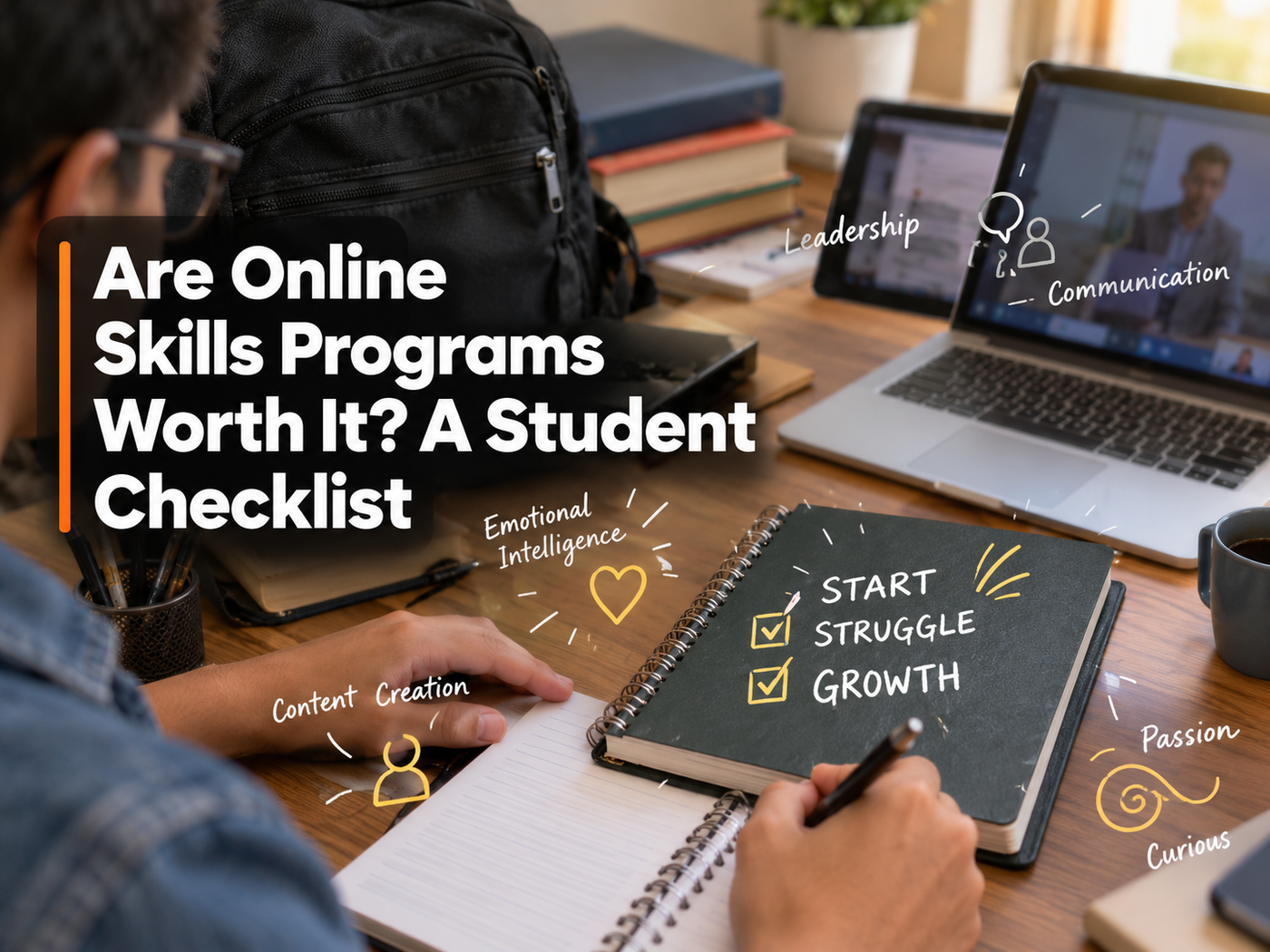
Are Online Life Skills Programs Worth It? A Student Checklist
Written by: DiRECTIV Editorial Team | Reviewed & Fact-Checked by: Shivam PandeyLast updated: November 2026 | 3 min read
Online life skills programs are worth considering only if they actually help students use what they learn in real life and tackle real-life problems. Before joining an online programme, check whether it offers practical learning, experienced mentors, affordable pricing, and personalised guidance rather than just recorded lectures.
Table of Contents
- Why Do Life Skills Matter Today?
- How to Choose the Right Online Life Skills Program?
- Why Consider DiRECTIV?
- Final Verdict
- Frequently Asked Questions
Why Do Life Skills Matter Today?
Getting good marks is important, but does it prepare you for real life?
Think about it. You may know history, mathematics, or science, but are you able to manage your own money? Can you present your ideas properly? Are you confident enough to face an interview?
These are the things that matter in the real world.
Some important skills every student should work on include:
- Communication: Expressing your thoughts clearly and confidently.
- Financial literacy: Managing money, budgeting, saving, and understanding investments.
- Emotional intelligence: Understanding your emotions and handling different situations.
- Content creation: Creating useful content and understanding digital platforms.
- Leadership: Taking responsibility and working with people.
- Problem-solving: Finding solutions instead of getting stuck.
If you want to explore more skills, you can also read our guide on Best Skills to Learn in 2026 Before 2027.
How to Choose the Right Online Life Skills Program?
Choosing the right platform matters. Some platforms focus more on selling courses and recorded lectures than understanding whether students are actually learning something useful.
So, before joining any programme, here are a few things you should check.
1. Check Who Is Teaching You
Before joining a programme, first check who is actually teaching you. Do they have proper knowledge, qualifications, or experience in the field?
For example, if you want to learn finance, wouldn't it make more sense to learn from a qualified CA or someone with actual experience in financial markets?
Similarly, if you want to learn content creation, you should learn from someone who is actually creating content and understands how the industry works.
Think about it: would you prefer learning business from someone who has actually built or managed a business, or someone who only knows the theory?
Don't select a platform just because its company name is popular. Check the person who is teaching you.
You are not just paying for a course; you are paying for someone's knowledge, experience, and guidance. Choose that person wisely.
2. Is the Programme Affordable?
As a student, you may not have a regular income. So, the price of a programme matters.
An expensive course does not automatically mean better learning. Before paying, check what you are actually getting for that price.
Does it provide useful learning material? Can you ask questions? Is there any mentor support? Does the programme offer something that you can actually use?
Choose a programme that gives you good value without putting unnecessary financial pressure on you.
3. Does It Help You Solve Your Own Problems?
This is something students should seriously consider.
Every student has different problems. So, how can the same recorded lecture solve everyone's problem?
For example, imagine three students learning communication skills.
One student has a lot to say but is not able to express their thoughts properly. Another student is underconfident and hesitates while speaking. The third student talks a lot but doesn't know how to communicate effectively or organise their thoughts.
Now, all three have different problems. So, will watching the same recorded lecture solve all three problems?
Probably not.
They need someone who can understand where they are struggling and guide them accordingly. The same applies to financial literacy, career planning, and personal development.
Learning information is one thing, but getting the right guidance to improve yourself is equally important.
4. Is the Learning Practical?
Just watching lectures and understanding theory is not enough. You should be able to apply what you learn.
For example, if you are learning financial literacy, you should be able to manage your budget. If you are learning communication, you should get opportunities to practise speaking and expressing your ideas.
Before joining, check whether the programme includes practical activities, real-life examples, and feedback.
Why Consider DiRECTIV for Learning Life Skills?
At DiRECTIV, the idea is to help students develop practical skills by learning from people who actually have knowledge, experience, and expertise in the fields they teach.
For example, when learning content creation, you should learn from someone who is actually creating content and understands the industry. Similarly, when learning finance, guidance from someone with relevant financial qualifications and experience can help you understand things better.
Along with learning from experienced people, affordability and personalised guidance are also important. The focus is not just on giving students recorded lectures, but on helping them understand their problems and improve the skills they actually need.
You can explore DiRECTIV to know more.
Final Verdict
So, are online life skills programs worth it? Yes, but only if they actually help you improve.
Don't just look at the company name, course certificate, or number of recorded lectures. Check who is teaching you, whether the programme fits your budget, whether the learning is practical, and whether someone can guide you according to your problems.
At the end of the day, you don't just need information. You need the right knowledge, practical experience, and guidance to use what you learn in real life.
Frequently Asked Questions
1. Are online life skills programs worth it for college students?
Yes, if they help students develop skills they can actually use in real life. Before joining, check the mentor's experience, practical learning, affordability, and whether the programme offers guidance.
2. Which life skills should students learn?
Communication, financial literacy, emotional intelligence, problem-solving, leadership, and content creation are useful skills. Start with the ones that can help you overcome your current challenges.
3. How do I choose the right online learning platform?
Check who teaches the programme, their actual experience, the course price, practical learning opportunities, and whether you can get personalised guidance. Don't choose only because a platform is popular.
4. Are recorded lectures enough to learn life skills?
Recorded lectures can help you understand a topic, but applying that knowledge is different. Skills such as communication, leadership, and financial management also require practice, feedback, and sometimes personal guidance.
Written by: DiRECTIV Editorial Team.
🔗 Connect: DiRECTIV on LinkedIn
Reviewed & Fact-Checked by: Shivam Pandey, Co-Founder | Digital Strategist & Creator Coach
Shivam Pandey is an entrepreneur, Co-Founder at DiRECTIV, and creator coach with over four years of hands-on experience scaling digital ventures, audience growth, and mentorship programs. He leads content curriculum and real-world execution strategies for young professionals and digital creators.
Ready to build real-world skills?
Join DIRECTIV and start your journey in finance, content and communication.
Get in Touch